
There is a speed limit when you drive on the freeway. This tells you how fast you need to go to be safe on the road.
What if this happened when managing money?
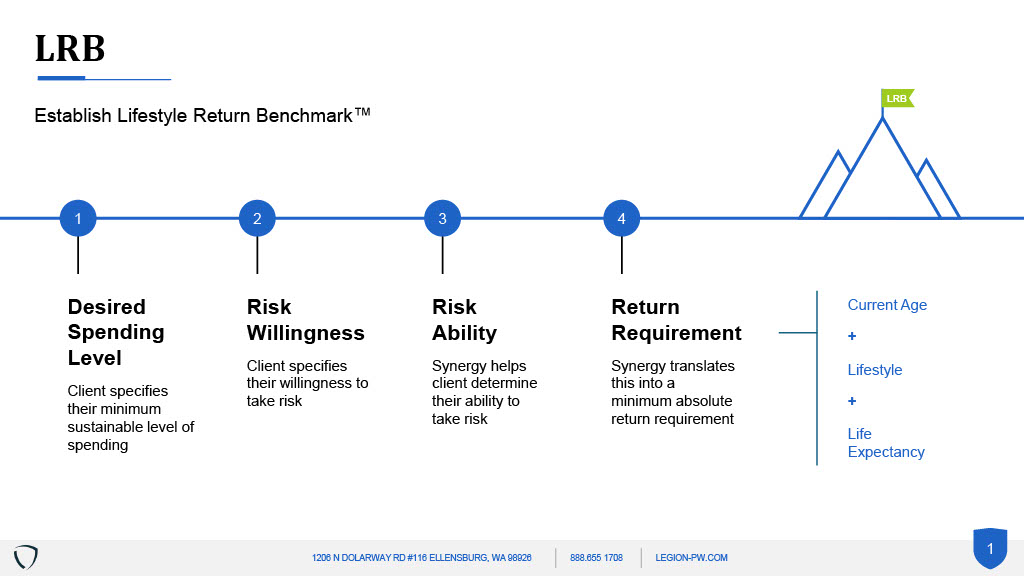
Wouldn’t it be good to know the maximum return you need to meet your objectives? If you knew this, you could have a much more accurate picture of how to plan for expenses, inflation, taxes, and fees. You would know what returns are needed or the “speed” of what your portfolio needs to accomplish.
The next step would be managing the risk at your required rate of return. This is called a risk-adjusted rate of return. In layman’s terms, how can you get the returns at the lowest possible risk? How do you know what risk to take or NOT to take? Ironically, financial advisors rarely, if ever, do this. They don’t calculate your risk capacity. Rather than taking this logical approach to designing an investment strategy, the industry standard has been to have the risk assigned to you based on the portfolio model based on your answers to general risk questionnaires. This needs to be more effective. What if you can’t handle that risk? What if you won’t be able to reach your goals if the portfolio gets hit too hard? I’m sure you have heard horror stories of retirees in 2008 who had to go back to work when the markets crashed. This occurred because advisors did not know how to create a portfolio with more control over downside volatility; unfortunately, most still don’t know how.
Wouldn’t it be great if you didn’t have to get stuck with a “canned” portfolio model?
That’s exactly what we do. We calculate your required rate of return, discuss your risk comfort level, and clearly define your risk capacity. Then reverse engineer the portfolio, and build it to meet your specific requirements. Our firm is not limited to securities alone. We offer dynamic portfolios of securities, real estate, insurance, and private offerings.